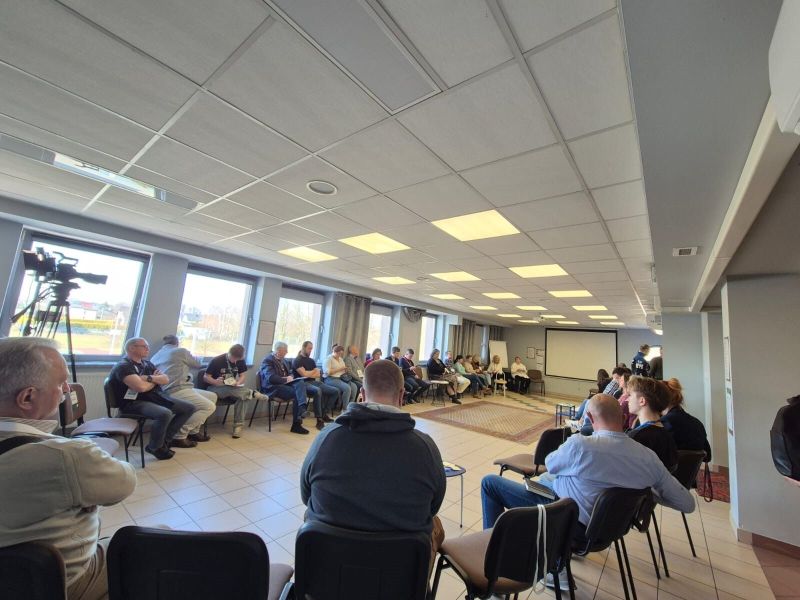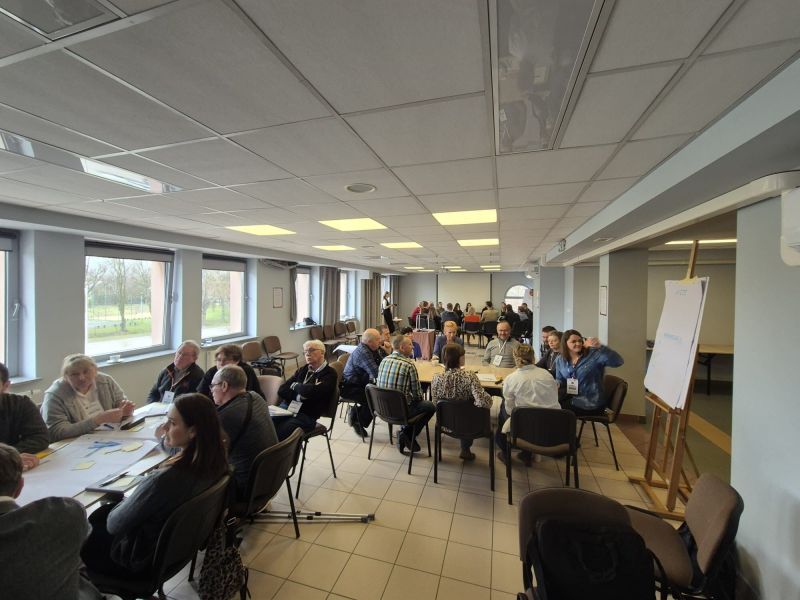
From February to May, the Democratic Innovation Research Group took part in observing the Rydułtowy Citizens’ Panel, held in Silesia, the first of its kind in the town’s history.
For the first time in the history of this town of 18,000, the town hall invited residents to a discussion in which they were asked to answer the questions: “How should post-mining areas be developed to serve all residents?” and “How can residents be involved in decision-making about the town?”
The citizens’ panel is considered one of the innovative tools of deliberative democracy. It involves creating a so-called DMP (Deliberative Mini-Public), a Deliberative Mini-Audience, consisting of people living in Rydułtowy, so that they represent a cross-section of the town based on age, gender, place of residence, education and mining background.
The panel organisers, selected through a competition by the town, the Pole Dialogu Foundation and the Ekosystem Rośnie Foundation (soon to be Hajmat na progu), prepared a series of meetings for residents, comprising the entire citizens’ panel.
In January, a draw was held from among those invited to join the panel. A representative mini-panel of 36 people was selected. From February to April, a series of educational sessions took place to familiarise the panellists with the issue of post-mining sites in the city and the perspectives of various interest groups. Finally, under the guidance of the moderators, the panellists drew up a list of recommendations, which will be submitted to the city authorities in May.
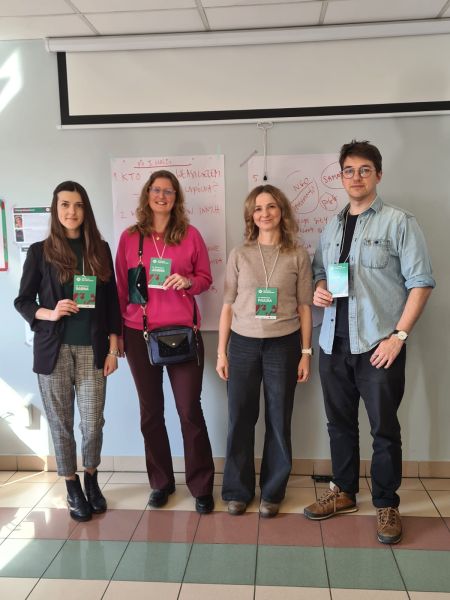
At each of the six meetings held between February and May, members of the team were present, observing and noting down their impressions of the panel discussions. Under the leadership of Prof. hab. Paulina Pospieszna, , MA Weronika Kędzia and MA Magni Szymaniak-Arnesen prepared a research questionnaire to be administered before and after the event. PhD Marta Hoffmann, PhD Jan Hruška, Prof. Paulina Pospieszna and MA Jakub Czajka, participated directly in the observations themselves, meeting researchers from across Poland and sharing experiences.